

Brownfield vs greenfield isn’t really a planning debate. We consider it to be more of a land investment strategy decision. For those considering UK land investment, your first strategic fork in the road can be>
- “Do I back a brownfield site with more complexity…”
- “Or a greenfield site with more uncertainty and time?”
This guide to brownfield vs greenfield investment is about answering that as an investor. We will talk in pounds, risk and timing – and then show you where Intelligent Land and the Land Value Accelerator™ (LVA Method™) can tilt the odds (and the upside) in your favour.

Brownfield vs Greenfield Investment: Quick Definitions (for Investors)
What is brownfield land?
Brownfield land is previously developed land, often former industrial, commercial or other built land which is now vacant, underused or ready for redevelopment.
From an investment point of view, brownfield typically means:
- Urban or edge-of-centre locations.
- Existing (or historic) buildings on site.
- Real or perceived issues: contamination, access, title, utilities, neighbours.
These “problems” are often exactly where the hidden value lives – if you can see it clearly enough (which is how we can help).
What is greenfield land?
Greenfield land is undeveloped land, usually agricultural fields or open space on the edge of a settlement.
From an investment point of view, greenfield typically means:
- Simpler physical conditions.
- More policy and political sensitivity.
- Longer timeframes (promotion, allocation, outline consent).
The investment prize can be huge: but so can the uncertainty if you’re working on hunches rather than data.
Brownfield vs Greenfield Investment: Key Differences at a Glance
Here’s a simple comparison through an investor lens.
/
| Factor | Brownfield Investment | Greenfield Investment |
| Typical location | Urban / suburban, closer to services, transport and existing demand. | Edge-of-settlement, village edge, strategic locations in local plans. |
| Planning policy tilt | Often policy support for re-use / regeneration, but site-specific constraints. | Highly dependent on local plan, housing land supply and political appetite. |
| Complexity | Higher: contamination, existing structures, title, utilities, rights of way. | Lower physically, higher politically and in terms of long-term planning risk. |
| Time to value | Often shorter if planning and technical risks are managed early. | Often longer: promotion, allocation, applications, potential appeals. |
| Abnormal costs | Frequently significant (remediation, demolition, infrastructure upgrades). | Typically lower per acre, but infrastructure / BNG / S106 can be chunky. |
| Community reaction | Can be positive (“clean up an eyesore”), but very sensitive to design and impact. | Often more contentious (loss of fields, traffic, character). |
| ESG / BNG story | Strong regeneration narrative; BNG can be delivered on or off site with creativity. | BNG can be both an opportunity and a cost, depending on strategy. |
| Discount on purchase price | Often priced with fear/uncertainty – good for those who can see through the fog. | Often aggressively priced if “obvious” strategic land – risk of overpaying. |
| Where hidden millions often sit | In solving the “problems” better and faster than others, and optimising the consent. | In timing, masterplanning and aligning with policy trajectory before everyone else. |
The punchline: when considering greenfield vs brownfield, neither is “better” in the abstract. The winning investment move is choosing the land type that fits your strategy, risk appetite and time horizon – and then using better intelligence than everyone else.
That’s where the Land Value Accelerator™ (LVA Method™) comes in.
How Land Investment Actually Makes You Money (Whatever the Land Type)
Most land investors understand that you make money in land when you create or enhance planning value. But in practice, many still buy on agent’s brochures, simple appraisal spreadsheets and optimism.
The real levers of profit are:
1. Planning status and potential
Not just “what’s consented”, but what could be consented under policy, politics and local need.
2. Technical and legal risk
The things that blow budgets: ground conditions, contamination, access, utilities, covenants, third-party rights.
3. Development mix and density
The layout, use mix and phasing that actually maximise land value, not just floorspace.
4. BNG and ESG strategy
Getting Biodiversity Net Gain and ESG right can unlock planning and add value – or quietly destroy it if mishandled.
5. Timing and deal structure
Options, overage, promotion agreements, phased purchases – structuring risk and reward.
The LVA Method™ is designed specifically to pull those levers intelligently:
Land Value Accelerator™ (LVA Method™) – Unlocking Hidden Millions.
For an investor, this is how our process maps onto your decision-making regards land being a good investment:
1. Review Planning Permissions
- What is the current planning position?
- Are there expired or historic consents that hint at potential?
- Does the local plan, housing land supply position or recent appeal history indicate more headroom?
2. Undertake Research
- Technical: ground conditions, contamination, access, utilities, flood risk.
- Legal: title, covenants, easements, ransom strips.
- BNG & ESG: baseline habitats, potential uplift, off-site options, ESG narrative.
- Planning: policy context, political climate, neighbourhood plan dynamics.
3. Scenario Testing
- Run multiple development scenarios: different densities, uses, layouts, BNG strategies.
- Model value, abnormal costs and timing for each.
- Identify the optimal value route – often revealing £1m+ uplift within 24 hours in many cases.
Instead of guessing whether a brownfield or greenfield investment opportunity is “better”, you get a side-by-side, AI-driven comparison grounded in 30 years of planning experience.
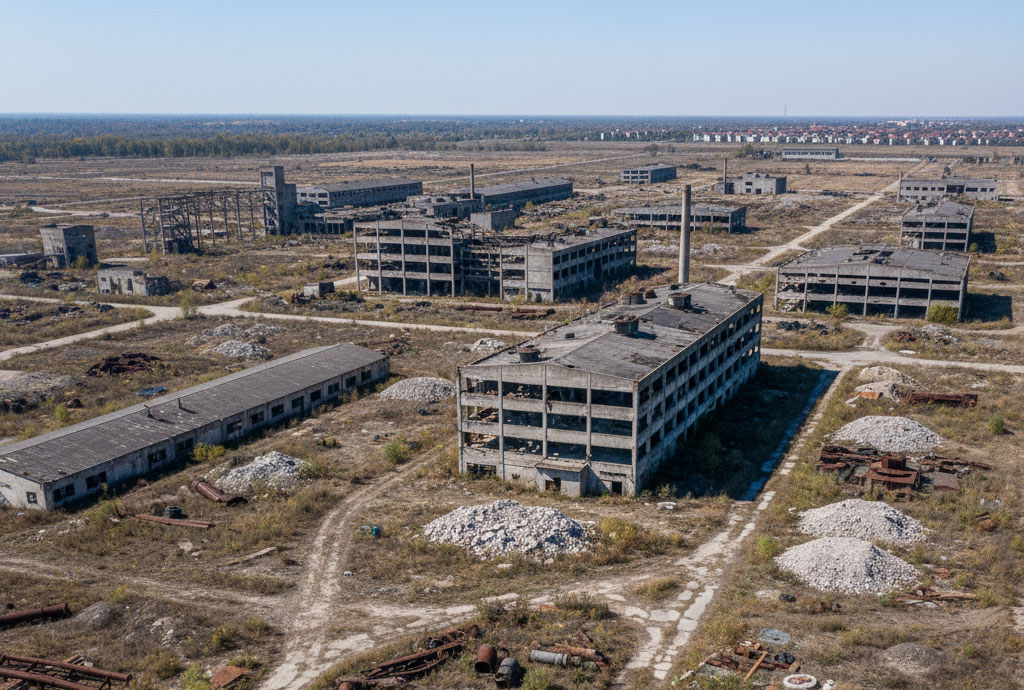
What Is an Example of a Brownfield Investment?
Let’s take a realistic brownfield scenario and walk it like an investor.
The opportunity
- A 0.8 ha former light industrial site on the edge of a town centre.
- A mix of tired sheds and hardstanding, largely vacant.
- The agent’s brochure suggests “potential for 25–30 residential units, subject to planning”.
At first glance, you might think: “Nice enough, but not transformational.”
The fears
This is where most investors hesitate:
- “What if the contamination is horrendous?”
- “What if highways or access kill the density?”
- “What if I’m missing a better use mix?”
- “What if there’s a reason it hasn’t been done already?”
How the LVA Method™ reframes it
Step 1: Review Planning Permissions
Intelligent Land reviews:
- Local plan policies for the area – town centre, mixed use, regeneration.
- Any historic applications or pre-app advice.
- Housing land supply pressure and recent appeal decisions.
Result: There’s policy support for higher-density, mixed-use redevelopment – more ambitious than the agent’s 25 to 30 units.
Step 2: Undertake Research
The LVA research layer surfaces:
- A manageable contamination profile with known remediation solutions.
- A realistic access and highways strategy that supports more dwellings than suggested.
- Utilities capacity that is tight, but solvable within a known cost band.
- Strong demand indicators for smaller units and some flexible commercial space.
Step 3: Scenario Testing
The LVA engine then tests scenarios, for example:
- Pure residential at 30, 40, 50 units.
- Mixed-use with ground floor commercial and residential above.
- Different parking ratios, block configurations and BNG strategies (on-site vs part off-site).
Within 24 hours, you have a data-backed picture:
- The “obvious” 25–30 unit play is actually leaving six or seven figures on the table.
- A slightly denser layout, with a smarter BNG and access strategy, produces a £1m+ uplift in land value potential vs the agent’s narrative.
- You also understand the likely abnormal cost range – so you can price intelligently and avoid getting burnt.
For you as the investor, the brownfield site goes from “maybe, if I’m brave” to:
“I know what this is really worth, what the risks cost, and how to extract the best value. If the vendor won’t move, I walk away; if they will, I know how far I can go.”
If you’re looking at a brownfield investment opportunity now, Intelligent Land can run it through the Land Value Accelerator™ before you bid, so you’re competing with insight rather than instinct.
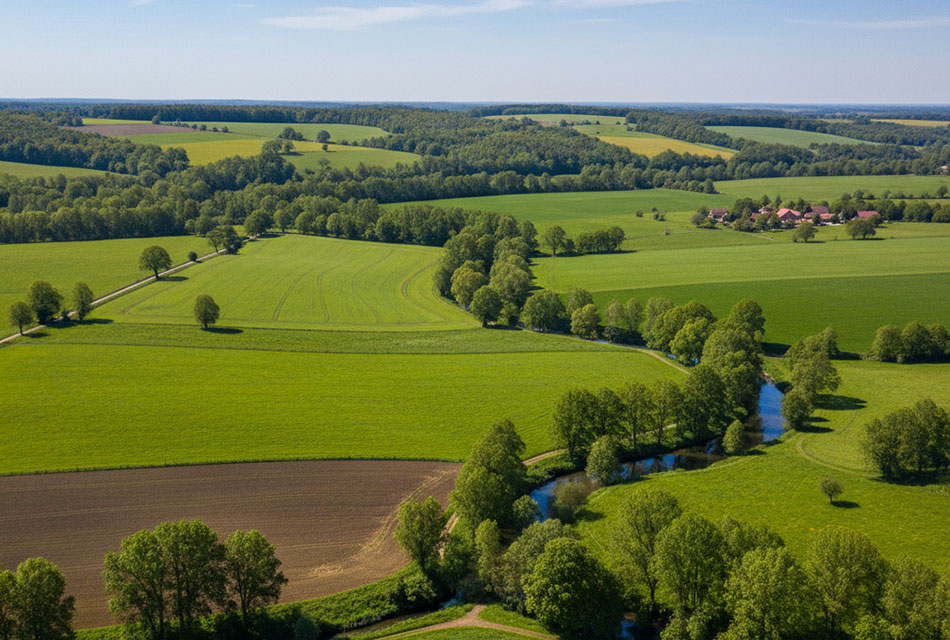
What Is an Example of a Greenfield Investment?
Now, a greenfield investment scenario.
The opportunity
- 10 acres of agricultural land on the edge of a growing market town.
- Adjacent parcels have been promoted or allocated in the local plan.
- The owner is open to an option or promotion agreement.
On paper, it screams “classic strategic land play”.
The fears
Investors – especially new ones – worry about:
- “What if the local plan changes direction?”
- “What if the council decides they’ve had enough housing here?”
- “What if BNG requirements or infrastructure asks make it marginal?”
- “What if my capital is tied up for a decade with no outcome?”
How the LVA Method™ reframes it
Step 1: Review Planning Permissions
Intelligent Land digs into:
- Local plan timelines and housing allocations.
- Five-year housing land supply position.
- Neighbourhood plan context and political signals.
- Recent applications and appeals on similar sites.
Result: A nuanced picture of how likely allocation or consent is, and on what timescale.
Step 2: Undertake Research
The research phase looks at:
- Access options (ransom risk, third-party land, visibility).
- Utilities and infrastructure capacity nearby.
- Topography, drainage and flood risk.
- Baseline habitats and BNG opportunities.
- Likely S106 and infrastructure contributions based on comparable schemes.
Step 3: Scenario Testing
The LVA Method™ models:
- Different densities and housing mixes.
- Alternative access strategies.
- Layouts that integrate BNG intelligently rather than bolt it on as an afterthought.
- Phasing and delivery patterns that might ease planning concerns.
You end up with:
- A realistic sense of best-case, base-case and worst-case land value.
- A view on timing – is this a 3 to 5 year play or a 10+ year promotion?
- A clear decision: structure an option/promotion deal now or move your capital elsewhere.
For greenfield land investment, the LVA Method™ doesn’t just say “yes/no”; it helps you design the strategy and structure of the investment to reflect real risk, not vague optimism.
Strategic Considerations: Which Is Better for Your Land Investment Strategy?
1. Your time horizon
- If you want shorter-term value creation, brownfield land investment can be attractive – especially where a clearer planning path and existing infrastructure exist.
- If you’re comfortable with longer-term strategic bets, greenfield land investment can be powerful – if it’s aligned with policy and demand and structured properly.
Tip: Many sophisticated investors hold a mix – some brownfield for nearer-term churn, some greenfield as long-dated options.
2. Your appetite for complexity
- Brownfield investment rewards those who are not scared of complexity – investors who can quantify contamination, access and title rather than back away.
- Greenfield investment can look “simple” at first glance, but the complexity shifts into policy, politics and delivery.
If you’re not a planner or engineer, this is precisely where Intelligent Land earns its keep – translating complexity over greenfield vs brownfield, into clear go/no-go and “how to” decisions.
3. Your capital and deal structure
- Brownfield deals often involve straight purchases or shorter options, with more immediate spend on surveys, planning and remediation.
- Greenfield often leans into options, promotion agreements and JV structures, so you can control more land with less upfront capital – but commit more time.
The LVA Method™ can help you decide not just whether a site stacks, but how to structure the deal so that the risk–reward profile matches your strategy.
4. Your need for narrative and ESG/BNG positioning
In today’s market, narrative and ESG are not window dressing. They influence:
- Planning decisions.
- Funding availability and terms.
- Exit values and buyer appetite.
- Brownfield can score highly on ESG: regeneration, re-use of land, sustainable locations.
- Greenfield can score highly if it delivers properly planned communities, infrastructure and meaningful BNG, rather than bolt-on mitigation.
Intelligent Land’s AI-driven scenario testing lets you explore ESG-optimised layouts and BNG strategies that support both planning success and value creation.
Common Fears with Brownfield vs Greenfield Land Investment– and How to De-Risk Them
Let’s tackle the big worries head-on.
“What if I buy a problem I can’t afford to fix?”
This is the number one brownfield fear.
The answer isn’t “avoid brownfield”. It’s:
- Do the heavy lifting before you commit.
- Use the LVA Method™ to quantify abnormal costs and planning risk upfront.
If the numbers don’t stack, you walk away early – not after you’ve sunk significant time and fees.
“What if planning policy changes and I’m left exposed?”
A live concern for greenfield strategic land.
You can’t control policy, but you can:
- Understand local plan trajectories and how robust they are.
- Position your land in a way that supports the council’s challenges (housing, BNG, infrastructure).
- Use Intelligent Land’s scenario testing to stress-test policy shocks.
Policy risk doesn’t have to be a blind gamble; it can be a modelled risk that you price and structure for.
“What if I’m leaving millions on the table without realising?”
This is the quiet fear behind many land investment decisions.
Most appraisals:
- Take a single development assumption.
- Apply some basic costs and values.
- Decide “yes/no” from there.
The LVA Method™ flips that:
It’s an explore engine – a way to search for better, non-obvious value routes. It exposes fat-tailed upside – the one or two layout or use combinations that materially out-perform the obvious play.
The most expensive mistake in land investment is rarely overpaying by 5–10%. Instead, it’s failing to see the scenario that would have added seven figures to the land value.
How Intelligent Land and the LVA Method™ Help Land Investors Specifically
Whether you’re looking at brownfield, greenfield or a portfolio mix, Intelligent Land can:
- Pre-screen opportunities – so you only spend serious time and capital on sites with genuine potential.
- Value engineer specific sites – brownfield or greenfield – using AI-driven modelling plus deep planning expertise.
- Support negotiations – with clear evidence on value, risk and realistic consent outcomes.
- Optimise exits – by aligning your planning strategy with what buyers and funders actually want.
In many cases, we’ve identified £1m+ uplift within 24 hours, simply by:
- Reframing what’s possible under planning.
- Re-cutting the development mix.
- Redesigning BNG and infrastructure strategies.
If you’re comparing brownfield vs greenfield opportunities right now, you don’t have to do it on gut alone. Book a free consultation with us to find out more.
FAQs
Is brownfield or greenfield better for land investment?
Neither is universally better.
Brownfield often suits investors looking for shorter-term, value-add opportunities and who are happy to tackle complexity. Greenfield often suits longer-term strategic plays with carefully structured risk and patient capital.
The right answer comes from site-specific analysis, not rules of thumb – which is exactly what the LVA Method™ is built to do.
What is an example of a brownfield investment?
A typical example is a former industrial or commercial site in a town that’s now underused or vacant – maybe with redundant buildings and suspected contamination.
With the right planning review, technical research and scenario testing (via the Land Value Accelerator™), these sites can move from “too messy” to “serious uplift opportunity”.
What is an example of a greenfield investment?
A common example is agricultural land on the edge of a settlement, with potential to be allocated or consented for housing.
The opportunity is to secure control (often through an option or promotion agreement), align with the local plan, and work towards consent – with LVA modelling to guide density, layout, BNG and timing.
How do I choose between a brownfield and a greenfield site?
Look at:
- Your time horizon.
- Your risk tolerance.
- Your capital structure.
- The planning and technical profile of each site.
Then use a structured process like the Land Value Accelerator™ to compare them on a like-for-like basis. You might find the “scarier” brownfield site has the safer numbers – or vice versa.
Your Next Step as a Land Investor
If you’re considering a land investment and wrestling with the brownfield vs greenfield question, you have two options:
- Proceed on instinct, a brochure and a basic appraisal.
- Run the opportunity through the Land Value Accelerator™ and see what others are missing.
Intelligent Land combines proprietary AI with 30 years of planning expertise to unlock hidden millions in land value. We don’t just advise; we accelerate outcomes.
If you’d like to:
- Sense-check a specific brownfield or greenfield opportunity, or
- Build a smarter land investment strategy that blends both,
Get in touch with Intelligent Land and ask for an LVA Method™ review of your next deal.
Land Value Accelerator™ – Unlocking Hidden Millions.


