
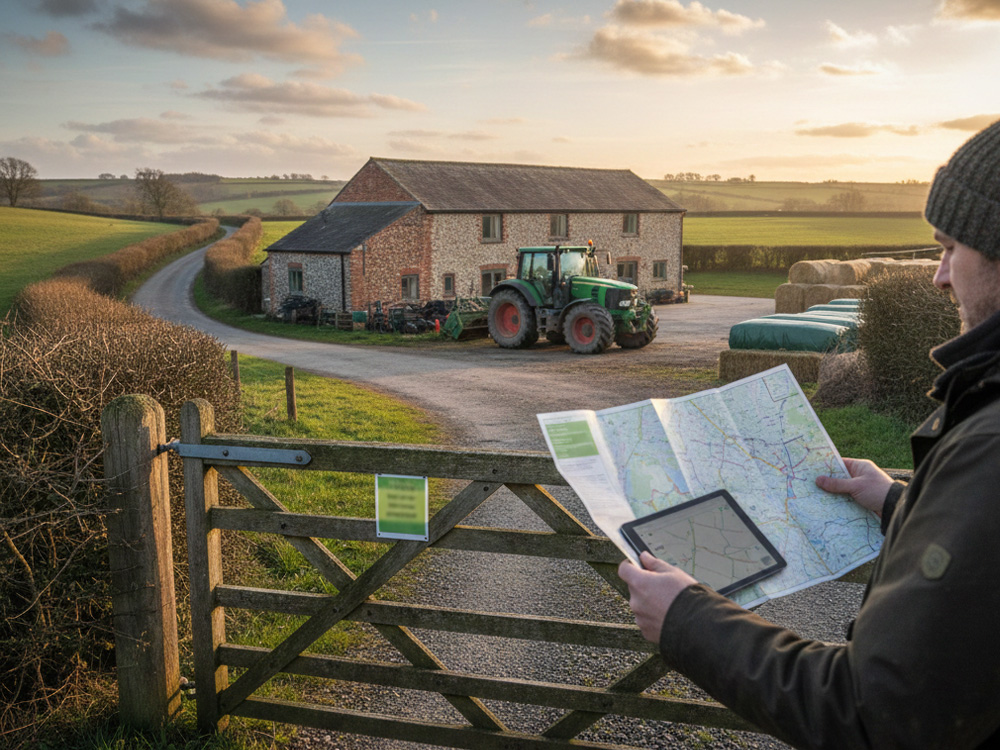
Most “rural planning” headaches aren’t really planning headaches.
They’re value problems wearing a policy mask.

A barn conversion that “should be simple” collapses on access. A diversification idea dies because it’s presented like a householder extension. A promising edge-of-village site gets the wrong kind of refusal… and suddenly the land carries a stigma it didn’t need.
Guide to planning permission in rural areas
If you’re here for rural planning permission advice, start with this contrarian truth:
The goal isn’t planning permission. The goal is the most valuable, deliverable consent.
That’s the difference between a strategy and a punt.
And it’s why Intelligent Land exists.
Land Value Accelerator™ – Unlocking Hidden Millions.
Black-Box Insights, White-Glove Results.
Before anything else: do you actually need a rural planning consultant?
If you’re weighing up whether to bring in help (and when), read these two first:
Then come back here – because the rest of this guide assumes you’re making decisions based on risk, upside, and speed, not just “what might get through”.
Step one: choose the route before you choose the design
Most rural applications fail for a painfully boring reason:
Someone designed the scheme they wanted… before deciding the route that policy will actually tolerate.
Broadly, rural planning routes fall into three buckets:
- Permitted development / prior approval (faster, more defined, but tightly constrained)
- Full planning permission (more flexible, higher upside, heavier evidence)
- Strategic promotion (longer runway, bigger potential uplift where growth is coming)
If your land is agricultural, this guide is a useful starting point: Building on agricultural land
A quick rural planning triage checklist
Before you spend a penny, get clear on five things:
- What’s the current lawful use (agricultural / equestrian / mixed / abandoned / unclear)?
- What’s on the planning record (approvals, refusals, enforcement, conditions)?
- What are the headline constraints (access/highways, flood risk, landscape, heritage, ecology)?
- Is the opportunity building-led or land-led?
- What’s the commercial objective: sell, promote, or hold and generate income?
That last one matters more than people admit – because it changes what “success” looks like.
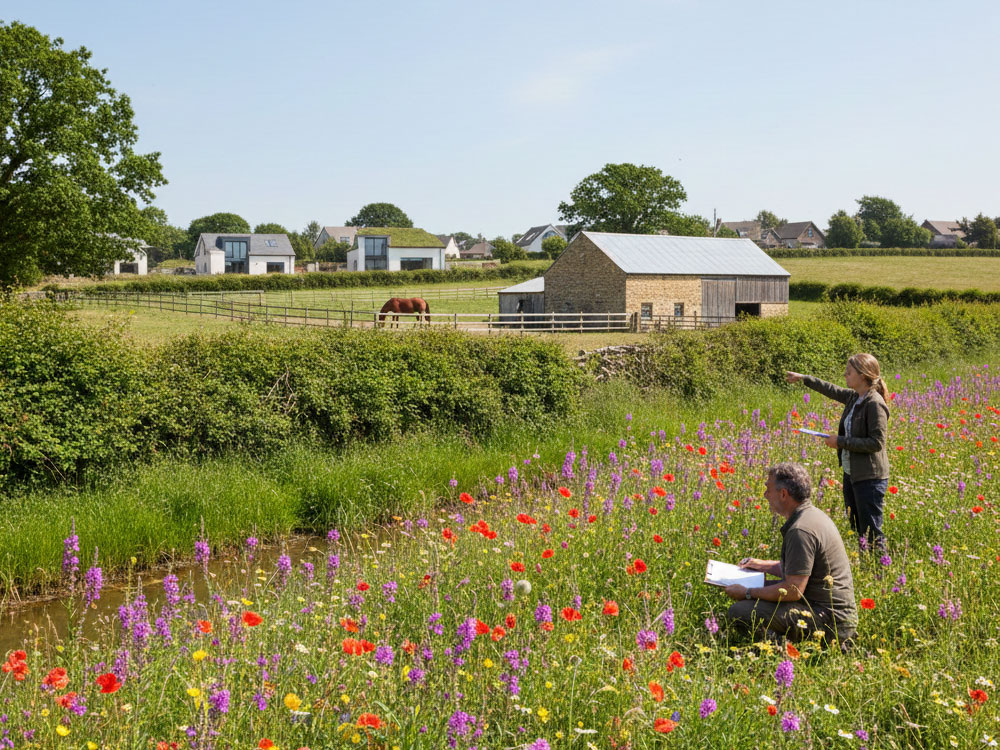
The main rural routes to rural planning permission (and where they go wrong)
1) Barn conversions: Class Q and beyond
If you’re looking at a barn conversion, don’t start with Pinterest. Start with eligibility and constraints.
- For the technical detail, see: Class Q barn conversion rules
- For the wider context (PD vs full planning vs alternatives), see: Barn conversion planning permission
Where it goes wrong:
- Treating a conversion like a disguised new-build
- Assuming access/highways will “sort itself out”
- Ignoring services, curtilage, flood risk, noise, and nearby operations until it’s too late
Where it shines:
- Redundant buildings with clear lawful history, decent access, and realistic conversion potential
2) Permitted development on agricultural land
Permitted development can be an excellent tool – but it’s not a magic wand.
If you want the clean overview, start here: Permitted development on agricultural land (guide)
And if you’re specifically trying to work out what you can do without full planning, this is the companion: Build on agricultural land without planning permission
Common mistake: believing “permitted development” means “guaranteed”.
In reality, prior approval still has tripwires – and the wrong submission can waste months.
3) Change of use: agricultural land to residential
This is where a lot of bad advice circulates.
Open fields don’t just become housing because someone calls them “low-grade” or “not really used”.
If your question is specifically “can we change the use?”, use this: Change the use of agricultural land to residential
This is also a good moment to revisit the bigger picture: Planning permission on agricultural land
4) Rural diversification (the most underestimated value play)
Farm diversification is often the fastest way to turn dead space into cashflow – and it can strengthen longer-term planning narratives too.
Start with the how-to: Farm diversification planning permission
If you want ideas you can pressure-test quickly: Farm diversification ideas
Where it goes wrong:
- A vague business case (“we might rent it out”)
- No visibility on traffic, noise, lighting, drainage, neighbours
- Treating ecology/BNG as admin, not strategy
Where it wins:
When the proposal is framed as rural economy + deliverability + minimal harm, not “please let me”.
BNG in rural planning: nuisance, or opportunity?
BNG is now part of the furniture in England, and many rural landowners see it as something that “eats value”.
That’s the default lens.
The better lens is: BNG can be a second income stream, or a planning advantage – sometimes both.
Use the right page depending on who’s reading:
- Landowners: Biodiversity net gain for landowners
- Active schemes: BNG guide for developers
- If your site is farmyard / barns / operational buildings: BNG for agricultural buildings
- If you’re looking at habitat units as an asset: BNG opportunities for agricultural land & farming
The point isn’t to “tick BNG”.
It’s to use it to make the scheme cleaner, more defensible, and sometimes more profitable.
Rural planning permission policy moves. Your strategy should too.
Rural planning permission policy isn’t just local politics; it’s national direction, changing definitions, and shifting tolerances.
The Intelligent Land approach: Land Value Accelerator™ (LVA Method™)
Traditional advice aims for a consent.
Intelligent Land aims for the best-value consent you can actually deliver.
That’s why we use the Land Value Accelerator™ (LVA Method™) – a three-step process built to stop you choosing the wrong route (and paying for it later):
1) Review Planning Permissions
We map what exists already: planning history, lawful use, constraints, conditions, refusals, and any hidden tripwires.
2) Undertake Research
Technical, legal, BNG, ESG and policy research – the stuff that decides whether a scheme is viable, saleable, and defensible.
3) Scenario Testing
We model multiple strategies (not one favourite idea) to find the option set that best balances speed, risk, and upside.
If you want the “value-first” mindset behind this, this page bridges the gap nicely:
Maximise land value with optimisation
The 5 most common rural planning mistakes (and the fix)
- Submitting too early: Fix: do a route and constraints review first.
- Designing before deciding the route: Fix: route first, drawings second.
- Underestimating access/highways: Fix: treat access as a value driver, not a technicality.
- Leaving ecology/BNG to the end: Fix: integrate it into layout and narrative from day one.
- Assuming permission = value: Fix: value depends on the *type* of consent, deliverability, conditions, and market appetite.
Next step: quantify what’s at stake before you commit
If you’re serious about rural planning permission, don’t start by asking, “Can I get consent?”
Start by asking, “What uplift am I missing if I choose the wrong consent?”. Our rural planning consultants can help you. We’re based in Hampshire, but offer consultancy nationwide.
And if you want a clear, commercial plan (not just policy commentary), the simplest way to begin is to request a Land Value Optimisation review using the LVA Method™.
Unlock hidden millions today.


